If you love mixing vintage flea-market finds with sharp tailoring or pairing rugged utility pieces with delicate eveningwear, you owe a debt to a small boutique that opened on Paris’s Left Bank in September 1966. When Yves Saint Laurent launched Saint Laurent Rive Gauche at 21 rue de Tournon, he didn’t just invent luxury ready-to-wear. He dismantled the rigid rules of the “total look” and handed women the blueprint for modern eclectic style.
Before 1966, high fashion was dictatorial. Haute couture demanded head-to-toe matching ensembles worn by a wealthy elite. Saint Laurent, inspired by the bohemian, intellectual energy of Paris’s Left Bank, flipped the script. He treated Rive Gauche as a creative laboratory where high art, street culture, menswear, and global folklore collided.
Here is how the early Rive Gauche collections (1966–1971) mastered the art of the eclectic mix—and why we are still dressing from that exact playbook today.
1. The High-Low Collision: Streetwear Meets Couture Craft
The core philosophy of Rive Gauche was bridging the gap between the street and the salon. Saint Laurent took humble, everyday garments and elevated them with luxury fabrics and razor-sharp cuts.
- The Pea Coat & Trench: Originally utilitarian naval and military outerwear, these staples were reimagined in rich wools and glossy ciré finishes, meant to be thrown effortlessly over sleek mini dresses or slim trousers.
- Mix-and-Match Freedom: Instead of selling pre-styled outfits, the Rive Gauche boutique stocked separates—knitted sweaters, crisp shirts, piqué cotton dresses, and tailored pants. Women were encouraged to curate their own combinations, blending high-fashion polish with youthful rebellion—much like how applying the Wrong Shoe Theory creates effortless contrast in modern outfits.
2. Gender-Bending Tailoring: The Power of Contrast
Nothing says eclectic quite like juxtaposing masculine structure with feminine fluidity. In 1966, Saint Laurent introduced Le Smoking, the first tuxedo tailored specifically for women, translating the rebellious spirit of his couture into the Rive Gauche universe.
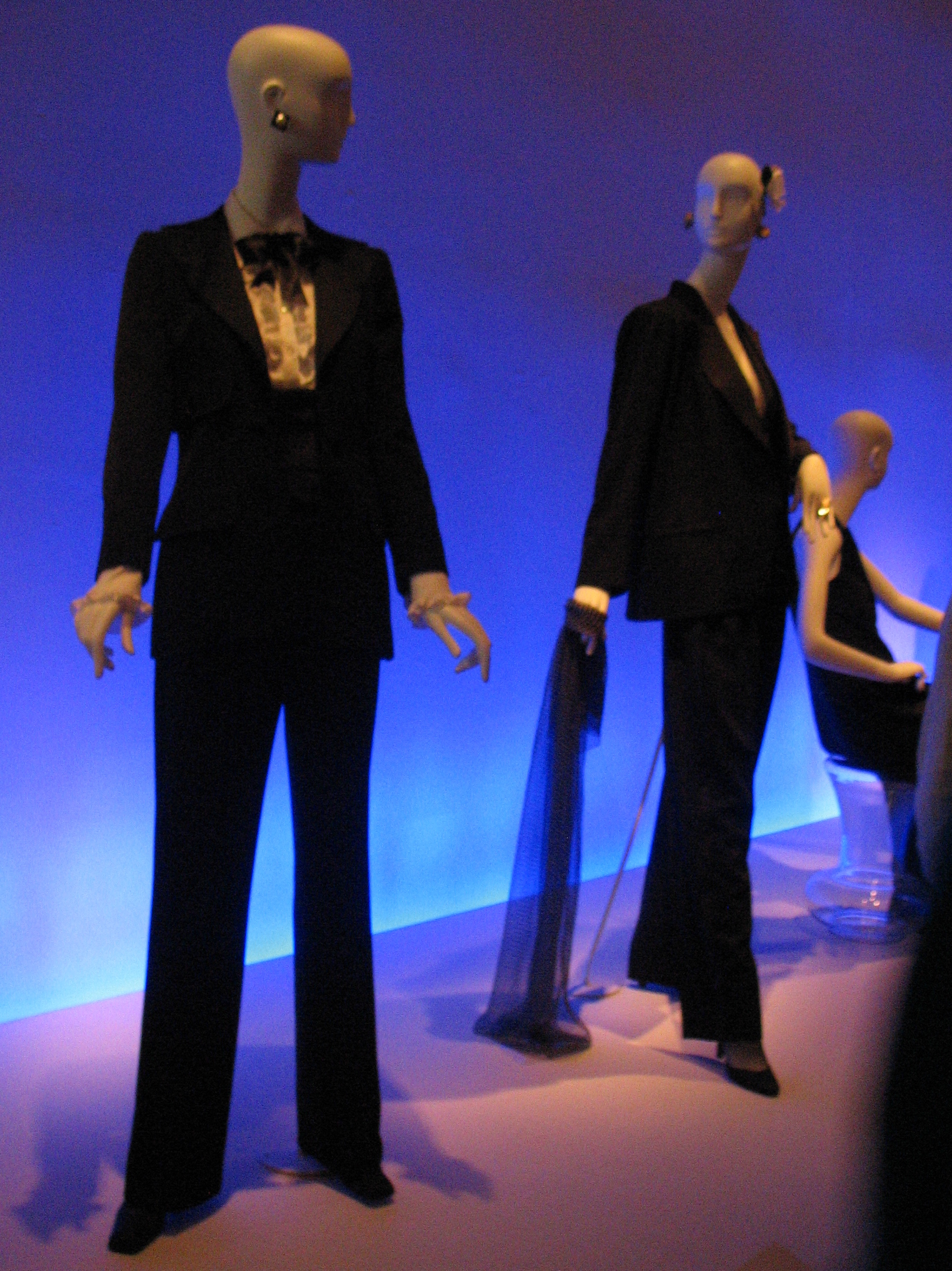
- Androgynous Chic: Pairing a sharp, menswear-inspired dinner jacket with sheer blouses, stacked costume jewelry, or soft silk trousers created a tension that felt daring and sensual.
- Everyday Uniforms: Beyond eveningwear, Rive Gauche normalized blazers, shirts, and trouser suits for the burgeoning female workforce, proving that borrowed-from-the-boys staples could look infinitely chic when styled with personal flair.
3. Global Wanderlust & Haute Bohème
Eclectic style thrives on storytelling and cultural curiosity, and early Rive Gauche was brimming with global references. Influenced heavily by his muse and collaborator Loulou de la Falaise—whom The New Yorker famously dubbed “the quintessential Rive Gauche haute bohémienne“—Saint Laurent infused his collections with exoticism and folkloric romance.
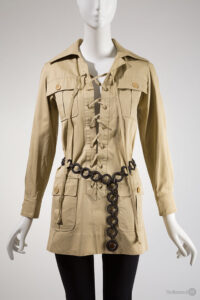
An original 1968 Saint Laurent Rive Gauche khaki Safari jacket from The Museum at FIT collection. Photo by Eileen Costa © The Museum at FIT / Wikimedia Commons (CC BY-SA 2.0).
- The Safari Jacket: Debuting in the late 1960s, the lace-up, four-pocket safari tunic brought rugged, expedition-inspired utility into urban wardrobes.
- Peasant Blouses & Tribal Accents: Saint Laurent paired fluid, folk-inspired peasant blouses and colorful mini dresses with chunky, tribal-inspired costume jewelry. It was a glamorous, worldly approach to bohemian dressing that felt collected rather than costumed—a technique that still works wonders when styling high-fashion accessories with casual and vintage pieces.
4. Pop Art & Retro Nostalgia
Saint Laurent never looked at fashion in a vacuum; he pulled directly from contemporary art and the recent past. Following the massive success of his 1965 Piet Mondrian color-block shifts, early Rive Gauche collections embraced bold, graphic Pop Art sensibilities alongside subversive retro revivals.
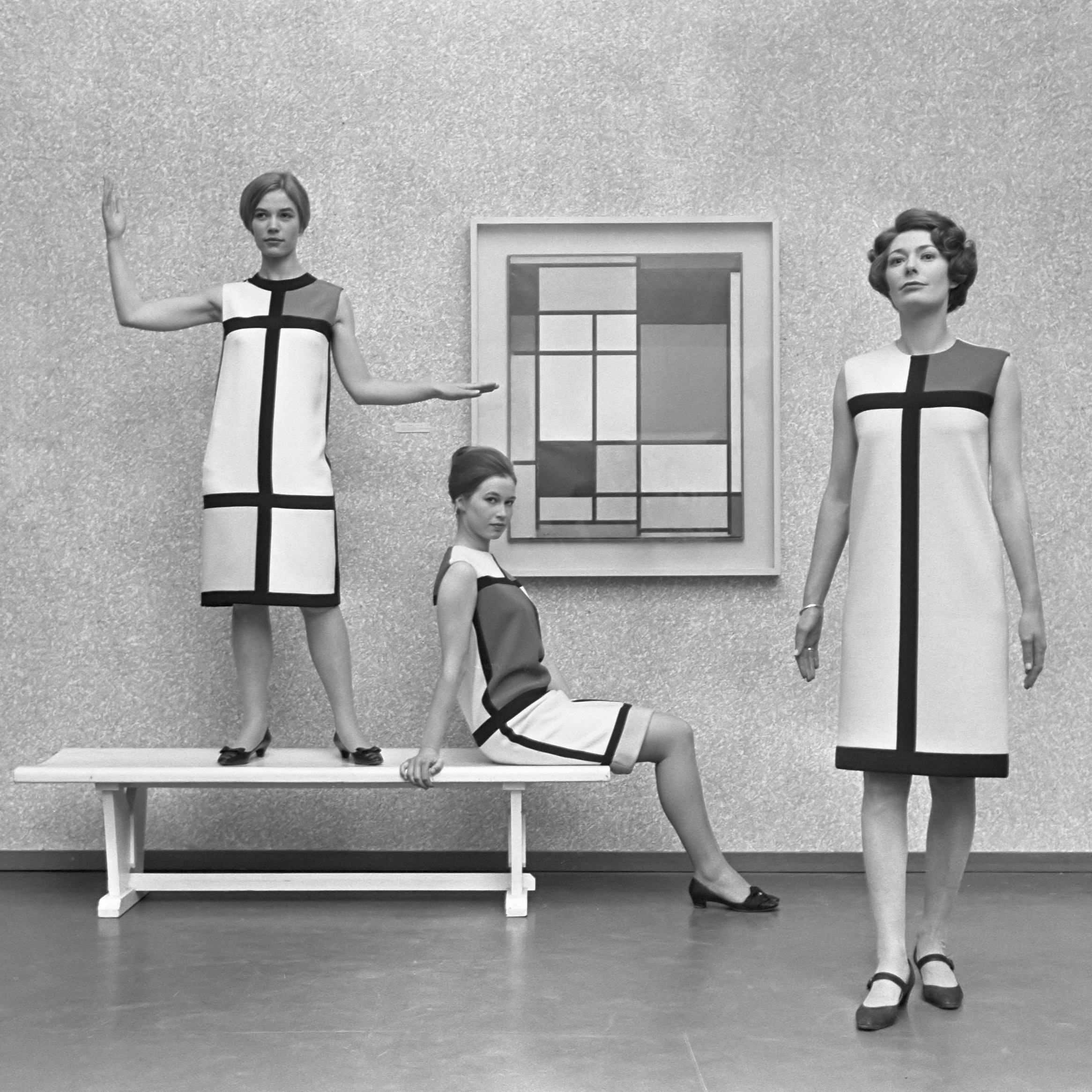
- Art You Could Wear: Color-blocked jersey sheaths and playful vinyl raincoats with knitted sleeves brought modern gallery aesthetics directly onto the sidewalk.
- Thrift-Store Glamour: By 1971, Saint Laurent shocked the establishment with his 1940s-inspired Libération (or “Scandal”) collection. Featuring broad-shouldered jackets, platform shoes, and vintage-style prints, it championed the idea of scavenging history to create something entirely new.
How to Channel Early Rive Gauche Today
At eclecticstyleblog.com, we believe the best wardrobes look like they were assembled over a lifetime of travels, thrift hunts, and smart investments—a philosophy that goes hand in hand with building an ethical, sustainable wardrobe. To capture that original 1960s Left Bank magic:
- Anchor eccentric pieces with sharp tailoring. Throw a structured men’s blazer or a classic trench over a vintage peasant blouse or slip dress.
- Play with texture and era. Mix sleek leather or glossy vinyl with cozy, tactile sweater knits.
- Never dress head-to-toe in one mood. Let utilitarian safari pieces rub shoulders with maximalist, sculptural jewelry.
Yves Saint Laurent once said he wanted to give women confidence, not just make them pretty. By handing over the building blocks of eclectic style at Rive Gauche, he gave every woman the freedom to be her own stylist.